We have made yemista (stuffed vegetables) many times. We, in fact, put one of our favourite recipes on our blog last year (see Great Lent Gourmet Day 38, March 27, 2012). Usually, stuffed vegetables refers to tomatoes, zucchini, and peppers. But, today, we stuffed an onion! Since the onion is a primary ingredient in much of our cooking, we wanted to round out the flavours and add another dimension of texture to the onion.
So, we decided to include some TVP (textured vegetable protein) to replace the meat in the recipe. Of course, if we were not fasting for Great Lent, we would make this with actual ground beef or ground pork. Today, we have the perfect vegan substitute.
TVP is an interesting (usually soy-based and sometimes contains cotton-seed, wheat or oats) food in that it looks like ground meat, has the texture of ground meat, and can fill the gaps in a dish, just like ground meat. The trick is to soak (reconstitute) the TVP before using it. It will absorb any liquid in the recipe if it is not soaked and reconstituted before adding it to a dish. Also, if you have a volume amount (e.g. 1 cup ground meat) in the recipe, you can more accurately make the substitution with the TVP. There are several looks to TVP, simulating ground meat, chicken nuggets, and even tuna flakes. It is readily available at many markets and through different brands, and is often a necessary addition to meals when protein needs to be added to a vegan diet. Of course we know that lentils and nuts give us plenty of protein, but TVP can give us more! And, if you have never tried TVP or a soy substitute for meat, and are at all worried about how much you will or will not like it, this is a great way to sample it, since it is combined with other lovely ingredients and flavours.
For this recipe, you will need the folowing:

2 large onions, peeled only
1/2 cup fine-ground TVP (a substitute for 1/2 pound ground meat)
1/2 cup olive oil
1 medium tomato, chopped or diced
1/2 cup Wine (we used a dry red)
Salt and pepper to taste
2 cloves garlic, minced
1 bay leaf
Start by peeling the onions. This is a given if you are going to cook onions. But, many times we cut the two ends of the onion, then peel off the skin (and often the first layer of onion, too). This time, you want to make sure that you keep the core of the onion whole! If the core is intact, then the onion will stay together when you boil it. If you take out the core at the base, the onion layers will fall apart and then you won't be able to stuff them because they will be all over the pot. So, cut off the top end and leave the core together.


Boil the onions whole. Start them in cold water, and bring it all to a boil together. Put the cut end up, so that the bubbles don't saturate the onion between each of the layers and make the onions too soft. Boil the onions for about 10 minutes until the outer layers are soft, but not squishy. You want them firm enough to handle without the onions falling apart in your hands. So, they should not be fully translucent, just soft.


Now, core the onions. Cut directly around the core piece and cut all the way through to the center of the onion, as if you are coring an apple. Then, with your finger push that core up to the cut end and the center of the onion will pop out of the onion. ('pop out' like a cork popping out of a bottle). You may find that you need a wider opening, and then you can cut out one more layer (or two) from the center of the onion.


Chop the center core of the onion (discarding the hard core piece from the bottom of the onion). Cut somewhat fine, since these are going to become part of the stuffing -- the pieces have to fit into the center opening of the onion with the other ingredients.

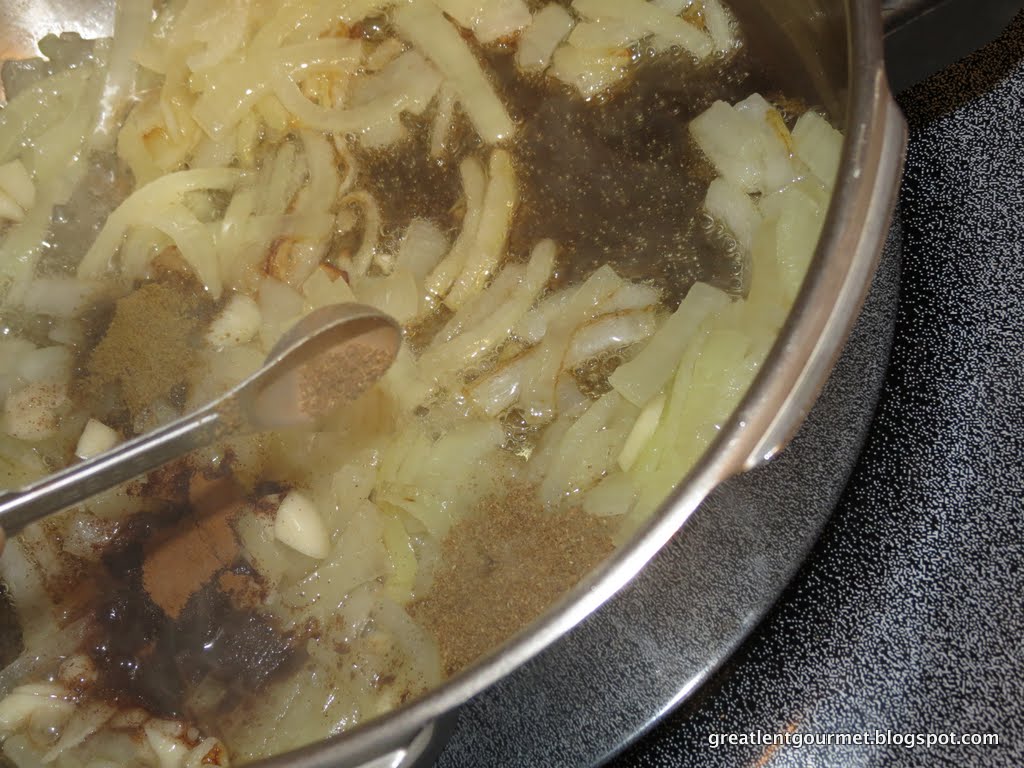
Put a bit of oil in a frying pan. Saute the chopped onion in the oil. Cook it well without adding too much colour. When the edges just start to tan, then add the other ingredients. This should take about 5 minutes on medium-high heat.
Now add the other ingredients. Add the garlic, tomatoes, bay leaf, salt, pepper, and the wine. Mix everything together so that all the ingredients are well combined. Let this cook together for about 15 minutes to allow some of the liquid to cook off and the mixture will become less watery. You still want some liquid in the pan, though, so only reduce this to about half the original amount of liquid.


After cooking the filling, let it sit for a few minutes until it is not steaming hot. Then, we can start to fill the onions.
Make sure there is some oil in the bottom of the baking dish. Pour enough to coat the baking dish. Now, set the onions in the dish with the cut side facing up.
Using a spoon, begin filling the cavity of the onion with stuffing. Spoon enough stuffing to fill a mound over the top of the onion. You may need to push down on the filling as you do this, which will allow you to get enough in there to match the size of the onion. Then, once you reach the top of the onion, spoon a little more stuffing to make a small mound on top. If some falls over the side of the onion, don't worry (see the next step).


Pour any remaining filling into the baking dish and surround the onions as evenly as you can. Then, the remaining chopped tomatoes get sprinkled over the top of the stuffed onions and the extra filling in the dish. It will look colourful and pretty.
Now, pour some oil over the top of the entire dish -- enough to make the whole dish shine. The recipe calls for a couple of tablespoons of oil, but you can judge how much you need by pouring freely over the onions.


Put the onions into the oven and bake at 350° F (175º C) for 30 to 35 minutes. You will see the onions turn to a golden brown on the outside, and the top mound of filling will start to get that nice, lightly charred look. That's when you take the onions out of the oven and they are ready to eat. Serve one onion per person with some of the extra filling from the bottom of the baking dish for each onion. Serve hot or warm. They taste better hot than they do cold!
After we had eaten, we thought that we could even try to put some Panko bread crumbs on top for a little more finished or decorative look. We also thought that if we made these as a side dish at a time that we are not fasting, and we used regular ground meat, we may even sprinkle some Parmesan Cheese on top because the flavours would work so well together. Alas, we are fasting, so we are quite content with our TVP filling with no cheese. They were wonderful as they were, and we look forward to another time to make these.
"The Universe is not rich enough to buy the vote of an honest man."
-St. Gregory the Great